Scalable architecture
Expand from single plants to multi-site scenarios in the cloud or hybrid environments.
Use physically accurate digital twins to virtually validate planning, robotics, and quality. Rely on STACKIT to boost transparency, efficiency, and data sovereignty in your production.
Increase efficiency and planning reliability in your production. Virtual simulations and data-driven analyses enable informed decisions before changes are implemented in real-world manufacturing.
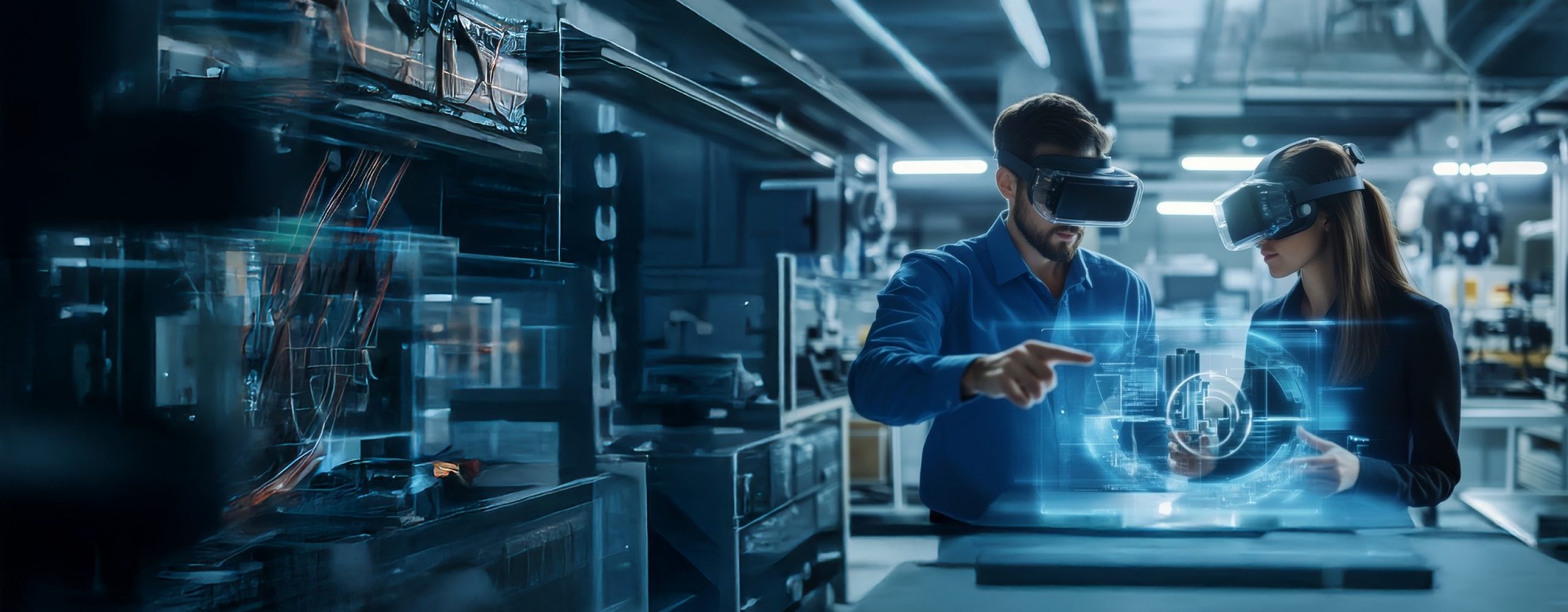
A modular, physically accurate Industrial Metaverse forms the foundation for a new generation of digital production planning. It is based on technologies such as NVIDIA Omniverse, digital twins, knowledge graphs, and AI, and runs seamlessly on STACKIT. Digital twins of machines, AGVs, robots, and production lines enable virtual commissioning and realistic simulations.
CAD models, existing simulations, and sensor data are integrated into interactive planning environments and parameterized in real time. Test robotics and pick-and-place applications virtually before transferring the programs directly from the digital twin to the real-world cell. A centralized 3D asset management system serves as a single point of truth, connecting engineering, production, and IT in a shared environment. AI models and knowledge graphs support simulation, quality assurance, and standardized analyses in the European STACKIT Cloud.
Position your manufacturing as an Industrial Metaverse pioneer. Scale from initial pilots to global plants in cloud, on-prem, or hybrid setups. Leverage an open technology stack to accelerate decision-making and enhance collaboration.
Expand from single plants to multi-site scenarios in the cloud or hybrid environments.
Use Omniverse, Python, ISAAC SIM, and knowledge graphs for your extensions.
Accelerate coordination between engineering, production, quality control, and IT.
Work together in interactive, virtual planning environments.
Benefit from European data sovereignty and compliance on STACKIT.
Build your Industrial Metaverse on a sovereign cloud architecture. Scalable compute and storage resources form the basis for simulations, digital twins, and AI models. Container-based platforms enable the flexible operation of Omniverse instances, analytics services, and knowledge graph components. Integrate heterogeneous data sources such as CAD models, existing simulations, and sensor data from production, and bring them together in a shared environment. This creates a consistent data foundation for simulation, planning, and collaboration across plants and teams.

Would you like to find out more about STACKIT cloud solutions? Do you have questions about cloud services, would you like an individual price estimate or would you like to find out more about our company? Use our contact form to get in touch with our experts directly. We will be happy to help you!