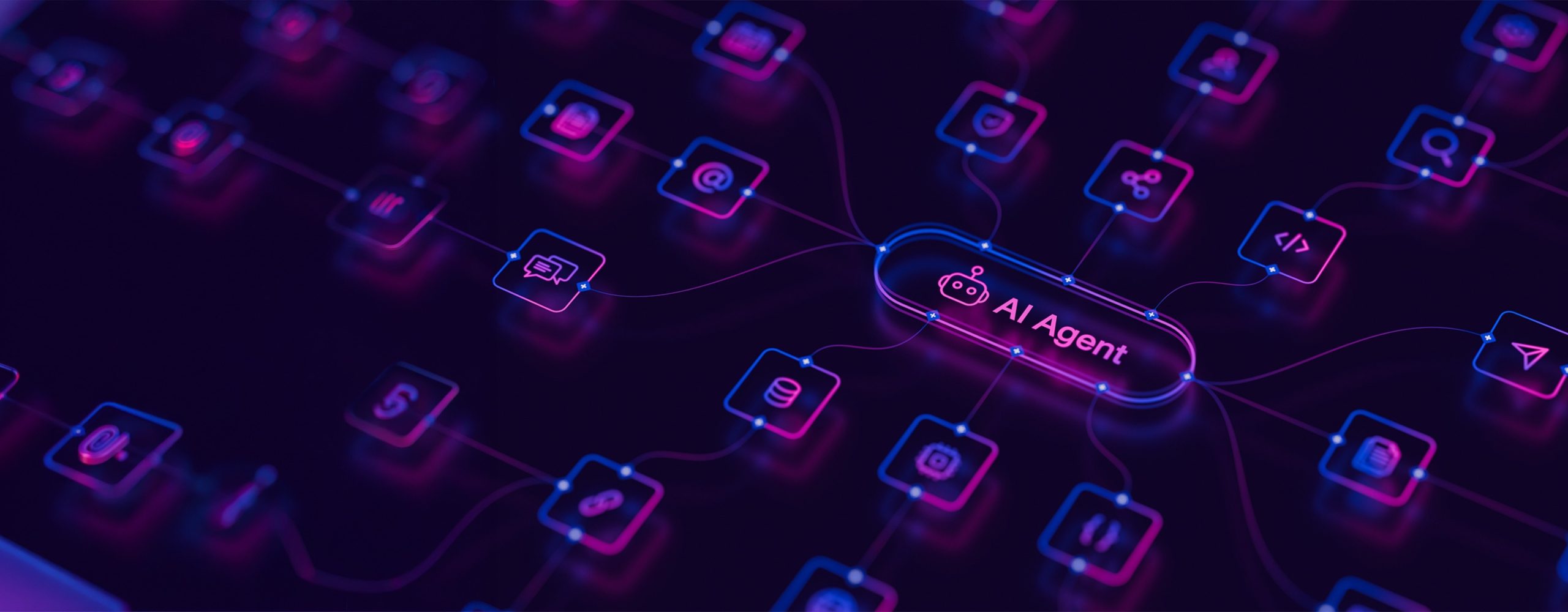
What is an AI agent and how does it work?
An AI agent is intelligent software that gathers and processes information from its environment and uses it to make decisions independently. Based on this, the agent performs actions to achieve a defined goal. Unlike traditional applications, an AI agent can learn from data and continuously improve its behavior using feedback.
What is the difference between AI agents and traditional automation?
Traditional automation follows fixed rules and predefined processes. AI agents operate more flexibly because they analyze information, recognize patterns, and react based on the situation. This makes them particularly well-suited for complex tasks where conditions change or multiple decisions are interlinked.
Which tasks are particularly well-suited for AI agents?
AI agents are particularly useful in situations where large amounts of data need to be analyzed, decisions need to be prepared, or processes need to be managed across multiple steps. Typical applications include digital assistants, data analysis, and word processing, as well as generative solutions for automated content creation. AI agents are also frequently used as programming aids or personalized customer service representatives.
What role do humans play in the use of AI agents?
Users remain a central component of the systems. They define goals, establish rules, and evaluate the results produced by the AI agents. Through targeted feedback, they help the agents continue to develop and provide reliable answers. Responsibility for decisions remains with the user.
How can AI agents be operated securely and under control?
Secure operation requires clear access rights, controlled data sources, and a suitable system environment. In a cloud platform like STACKIT, AI agents can be operated reliably, scaled, and integrated into existing systems. Companies retain control over their data, their applications, and the underlying processes.