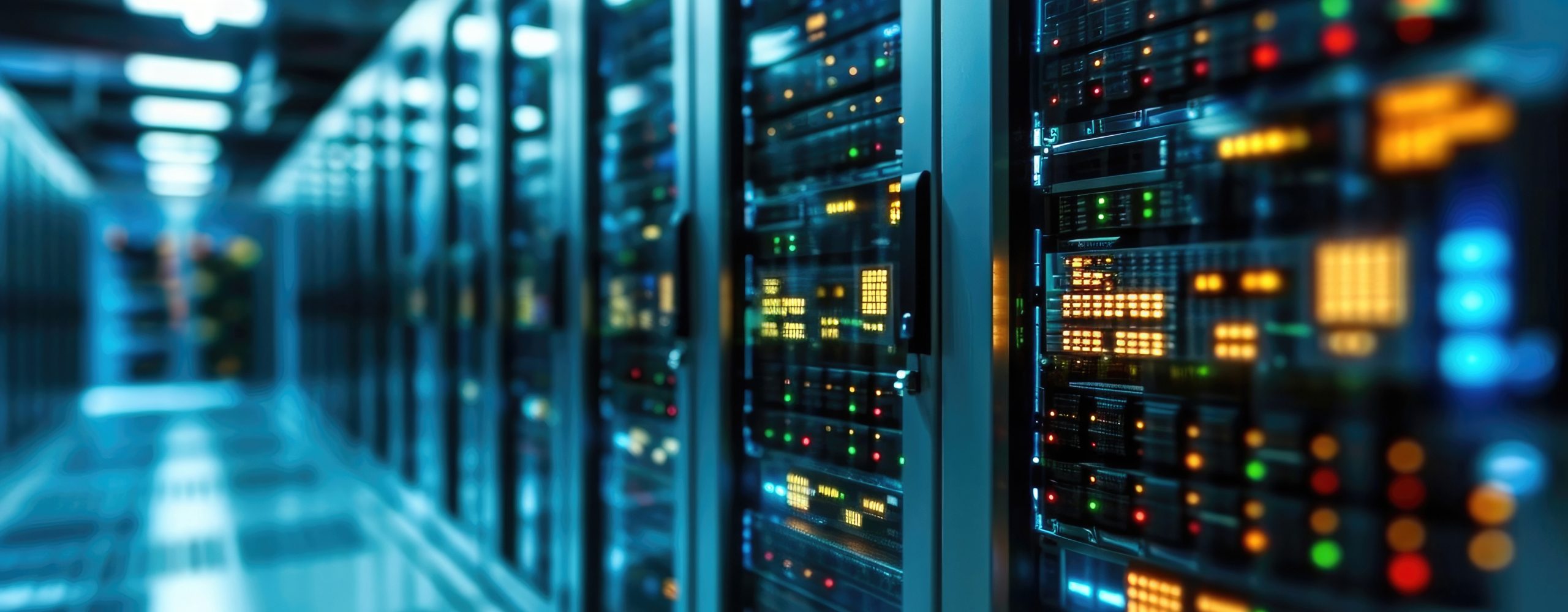
Our technology guarantees stable and uninterrupted operation even under exceptional conditions. With the help of our own transformers and powerful diesel generators, we guarantee a self-sufficient, redundant and uninterruptible power supply (UPS) with an emergency power generator for up to 72 hours. This system is supplemented by an equally redundant air conditioning system, cold aisle containment and demand-controlled temperature regulation.
STACKIT also meets the highest safety requirements in terms of fire protection: Modern early detection systems, nitrogen extinguishing systems and clearly separated fire compartments provide reliable protection. At the same time, real-time measurement of power consumption ensures full transparency and efficient control of energy consumption.
Security controls at the highest level
The physical security of the facilities follows a multi-level concept: high-quality security fencing, access control by card, code or biometric procedure and a security team on duty around the clock guarantee maximum protection. The concept is complemented by seamless indoor and outdoor building surveillance.
STACKIT also focuses on future-proofing the IT infrastructure: the racks have a modular design, can be individually configured and are equipped with sensors, special software and separate access solutions. A redundant data connection via separate routes ensures that data traffic continues to run reliably even in the event of a fault.
Future-proof and energy-efficient
STACKIT takes a holistic and resource-saving approach to data centers. The Ostermiething site in Austria is a flagship project in terms of sustainability: STACKIT uses water from a nearby river for cooling all year round. In combination with state-of-the-art technology, the data center achieves a PUE value of <1.2 - a top value in a European comparison. The Austrian Sustainable Building Council (ÖGNI) awarded the site a gold certificate for this concept.
The conscious use of resources also plays a central role at the German locations. By using energy-efficient cooling systems and intelligent power distribution, it is possible to both lower operating costs and significantly reduce the ecological footprint.