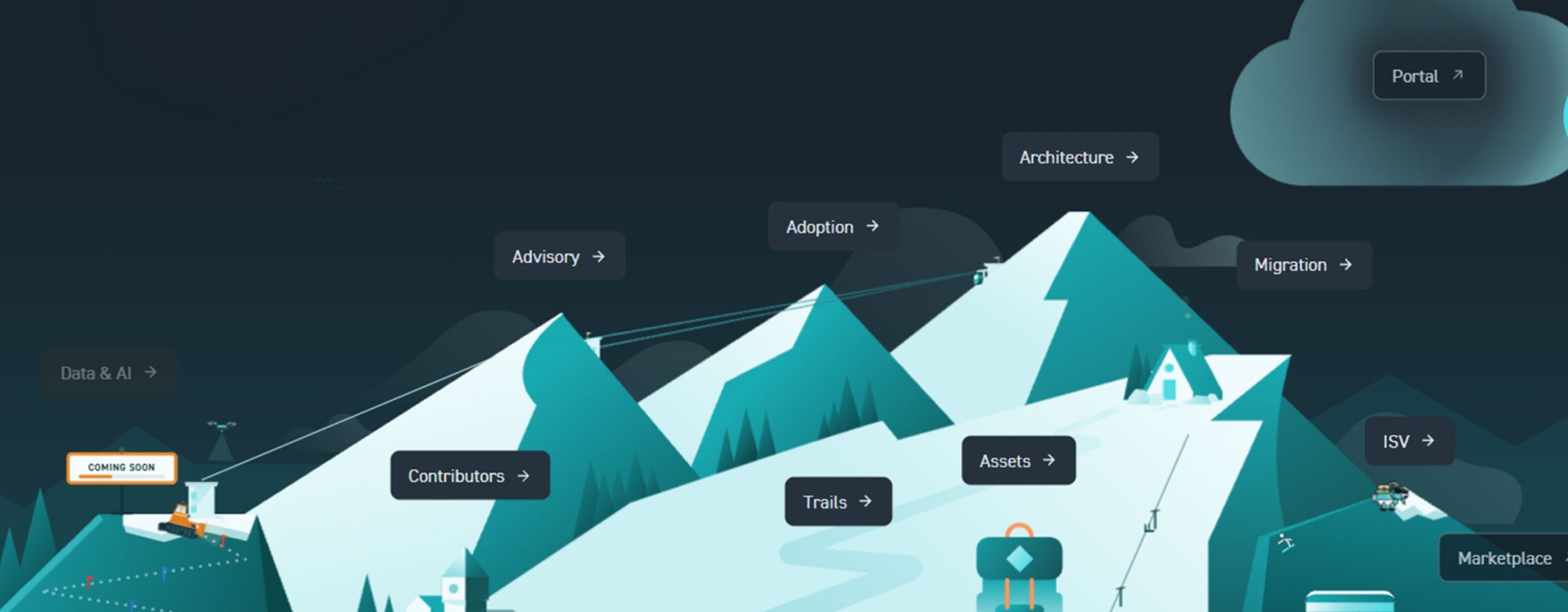
STACKIT Cloud Framework

Your roadmap for secure cloud transformation
Cloud Framework

At a glance: What is the STACKIT Cloud Framework?

The STACKIT Cloud Framework offers a holistic ecosystem of structured strategic guidelines, tried and tested best practices, binding governance guidelines, reusable architecture templates (blueprints) as well as specialized software tools and realistic production scenarios.

The framework thus covers the entire spectrum of entrepreneurial cloud initiatives without gaps: from complex mass migrations (6-Rs model) and operational cloud adaptations to targeted application modernization (refactoring / replatforming) and hybrid multi-cloud expansions to Agile new development of cloud-native applications (Greenfield Development).

The focus is on a consistent paradigm shift for practice: the change from passive reading to active execution ('Use the Platform' instead of 'Read the Docs').

For customers

It offers valuable orientation through tried-and-tested playbooks, blueprints, best practices and real-world examples.

For Partners

It provides the necessary tools and offers the opportunity for active participation and increased visibility in the ecosystem.

For us as STACKIT

We strengthen the highest credibility, trust and a fast time-to-value for customers and partners by using the cloud framework as an additional knowledge platform in our day-to-day business and continuously contributing additional content.

What makes the STACKIT Cloud Framework unique?

The platform approach of the framework is fundamentally different from the static, confusing documentation archives of classic hyperscalers. The framework acts as an interactive, transaction-based execution environment. Due to its AI-first and LLM-native structure, the entire information architecture is structured in such a way that KI models (such as Gemini or ChatGPT) can precisely read the context and act as operational copilots. Integrated tools - such as a dynamic Docs-as-Slides engine - also eliminate the manual effort required for outdated slide decks.

At the same time, the framework anchors the principle of genuine co-innovation: as an open contribution platform, it enables direct participation by internal teams, customers and STACKIT partners via the STACKIT GIT service. Through standardized Git workflows (pull requests) and secured by enterprise-capable Contributor License Agreements (CLAs), day-to-day operating experience from customer projects as well as expert knowledge continuously flow into the system.

Open Contribution Platform

The framework is based entirely on Open Contribution. It is an open platform where expertise is gathered and continuously expanded.

Git-based collaboration model

Collaboration works seamlessly via Git using pull requests—always backed by automated compliance and legal guardrails. Cloud advocates will love it!

Integrated 'Docs-as-Slides' engine

With just one click, the platform transforms content from a single source of truth into presentation-ready slides for management.

Machine-Readable (AI-Ready)

The framework was designed to be machine-readable from day one to provide large language models (LLMs) with structured context and to enable even more innovation through AI support.

The building blocks of the Stackit cloud framework

Advisory Framework

The STACKIT Advisory Framework forms the strategic foundation for a secure, digitally confident and business-oriented cloud transformation. It supports IT and finance managers in finding strategies, creating business cases and establishing governance - even before the first technical resource is provided. 

Learn more
Adoption Framework

The STACKIT Adoption Framework serves as a tried and tested guideline for anchoring cloud use in the organization in a permanent and scalable manner after initial technical successes. The concept, which is tailored to existing system landscapes, modernizes operating processes, empowers teams systematically and ensures technical excellence in the long term.
 

Learn more
Architecture Framework

The STACKIT Architecture Framework helps to build well-architectured, confident workloads. It offers tried and tested reference architectures, infrastructure-as-code blueprints and hardened security patterns for reliable implementation. 

Learn more

Migration Framework

The STACKIT Migration Framework provides a clear and predictable framework for the secure transition to the STACKIT Cloud. It combines proven migration methods with platform-specific best practices for a confident digital transformation. 

Learn more

ISV Factory Framework

The STACKIT ISV Factory Framework enables Independent Software Vendors (ISVs) to seamlessly build, integrate and roll out enterprise solutions on a secure, cloud-native infrastructure. In addition, the STACKIT Marketplace offers a direct monetization option with complete control over one's own intellectual property. 

Learn more
A woman and a man in the office are smiling together at a screen with program code, which the man is pointing at.

Become part of the community: Here’s how you can contribute

We invite developers, architects, and partners to share their knowledge within the STACKIT Cloud Framework. Active contributors with valuable assets and trails receive a higher ranking and, as a result, greater visibility among our customers.
 

  • Self-Sign-In: Easy sign-up for a quick start.
  • Git-Managed: Contributions are fully and conveniently managed via Git to ensure the best experience for contributors.
  • Focus on Assets & Trails: Contribute concrete building blocks and migration paths.
  • Highest Quality: Automated pipelines ensure code and text quality. Each pull request is finally reviewed by an expert using the “human-in-the-loop” principle (STACKIT).
Discover the STACKIT Cloud Framework

Central terms around the Cloud Adoption Framework

  • Cloud adoption: The structured process by which companies gradually migrate their IT systems, applications and data to the cloud and operate them there.
  • Framework: A methodological kit that bundles best practices, tools, phases and strategies for a successful cloud implementation.
  • Assets & Trails (new in STACKIT CAF): Reusable building blocks (Assets) and structured paths (Trails), which come from real project experiences and help with the implementation.
  • Migration: The technical and organizational transition of existing workloads, data and applications from local systems to the cloud architecture.
    Transformation: The further development of business processes, IT structures and teams in order to use the full potential of the cloud.
  • Governance: The management and control of cloud resources, services and costs, taking into account security, compliance and company objectives.
  • Workloads: applications, services and data that are operated and managed in the cloud.
  • Computing Services: Cloud-based computing power, storage solutions and network services that can be flexibly provided and scaled.
  • Hybrid environment: The combination of local IT systems and cloud resources that are managed and used together.

Frequently asked questions about STACKIT's Cloud Adoption Framework